Bridge Lane
Rapid & Aluminum Tooling — Real Molded Parts in 12–25 Working Days
Bridge tools that ship product while the steel amortizes: 7075 aluminum or P20 inserts, honest life ratings, and a documented graduation path into production steel.
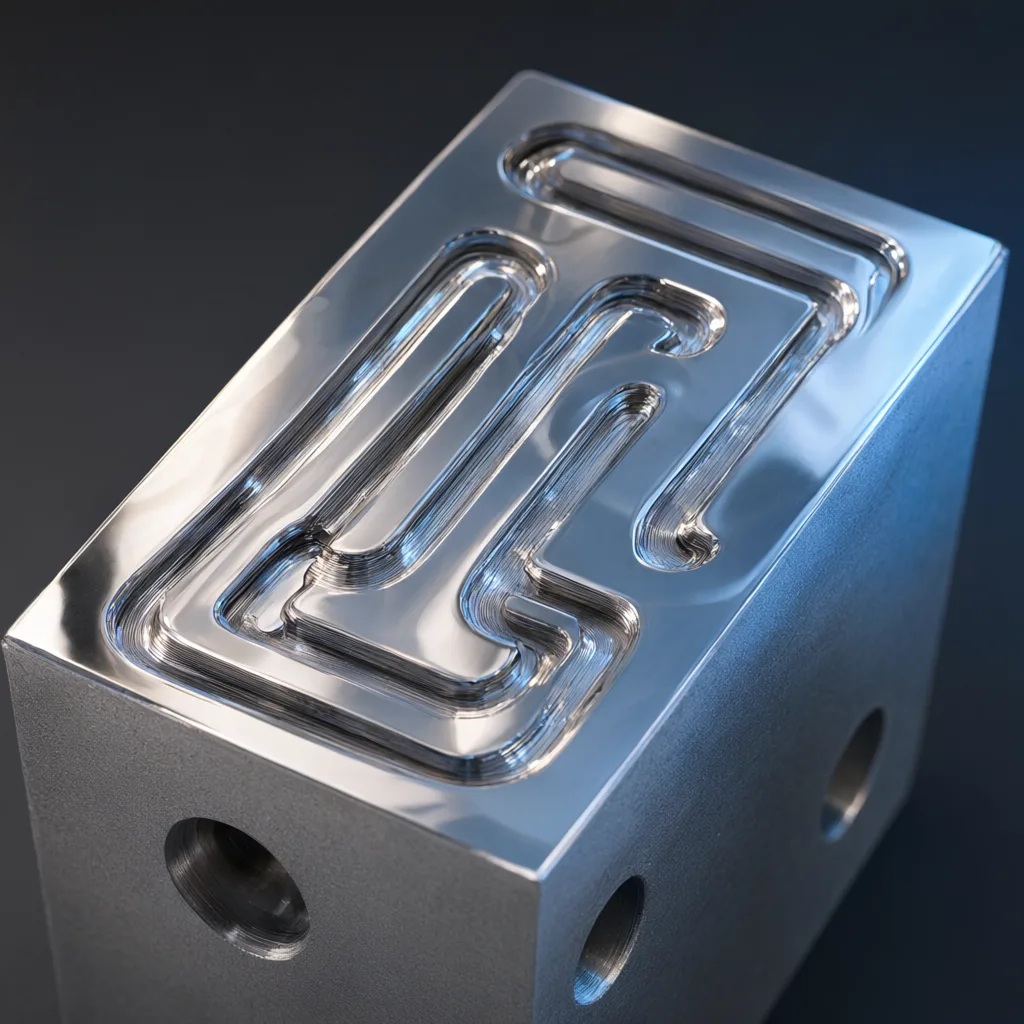
Rapid tooling buys you the thing prototypes cannot: real parts in real resin, now. Aluminum 7075 or soft-steel inserts CNC-cut straight from signed CAD ship molded samples and bridge batches in 12–25 working days — a third of production tool time — for market tests, pilot retail drops, crowdfunding fulfillment and validation that only off-the-tool parts provide.
What Bridge Tooling Is For
- Launch before tooling pays back: ship 1,000–20,000 real units while the production tool amortizes in the background.
- Real-resin validation: customers handle the exact shell, in the exact resin, with the exact finish — not a resin-printed stand-in.
- Process learning: gate freeze, warp and sink measured on aluminum teach the steel tool design — your production T1 arrives already de-risked.
- Designs that still move: aluminum edits in days, cheap, while the geometry is honest about what changed.
Aluminum vs Soft-Steel Rapid Tools
Aluminum 7075 inserts: fastest (12–18 working days), cheapest, ideal for 1k–50k shots of simple, low-abrasion parts in PP/ABS/PE. Soft pre-hard steel (P20): 18–25 days, handles glass-filled resins, higher clamp, 50k–100k+ shots, and can carry the program straight into semi-production. The AI quote prices both against your resin and volume so the choice is arithmetic, not philosophy.
Honest Limits (We State These Upfront)
Rapid tools run slower cycles than finished production tools, avoid the most abusive textures, and assume the part geometry is near-frozen — they are a bridge, not a substitute for good tooling when the program is committed. Expect simpler parting, standard steels in wear spots, and life ratings we document. Nobody selling speed should hide that; we put it on the quotation.
The Graduation Path
When volume commits, the validated geometry, gate scheme and process window move from the bridge tool into the production steel as a documented package — the mold shop starts from known answers instead of clean CAD and crossed fingers. Both tools live in the same order system, so switching lanes mid-program is a status change, not a re-onboarding.
Start It This Week
Upload CAD, set quantity tiers (say 2k bridge / 20k production) and the quote returns the bridge-vs-steel economics side by side. Samples off the bridge tool: 5–10 free, shipped before balance, as everywhere at MOMAKING. Talk to the tool planner directly: opheliamyers221@gmail.com / WhatsApp +1 315-623-3808.
Frequently Asked Questions
How many shots will an aluminum tool make?
Can a rapid tool become the production tool?
Why is my part's cycle slower on a bridge tool?
What file stage do you need?
The Bridge Batch Business Case: A Worked Example
A crowdfunding team with a validated enclosure model faces the launch arithmetic: production steel costs $18k and 40 working days; the campaign ships to 4,000 backers in 90 days. Doing nothing is not an option and full tooling is not funded in time. The bridge lane: aluminum 7075 single-cavity tool at roughly one quarter of the steel price, 15 working days; 4,000 ABS shots over two press-weeks at a per-part cost perhaps 35–40% above the eventual steel-tool unit price; finishing and packaging identical. The campaign ships on the promise date; the steel tool is ordered against revenue, informed by actual field returns on the bridge parts. Total incremental spend versus shipping late: a tool that will run 20,000 more shots as the pilot-steel mid-grade before retirement. What bridge tooling really buys is not the parts — it's the fact that the $18k steel decision is made by a company with revenue and five hundred customer reviews instead of a spreadsheet and a hope. Every engineering change validated on bridge parts is a change that doesn't get executed as a steel rework on the production tool: the same argument, in cost-avoidance form, applies to any pilot program.
Why Bridge Parts Are Honest Predictors of Steel Parts (and Where They Lie)
Aluminum tools run the same material through the same physics at gentler temperatures: bridge shots teach the part's shrinkage behavior, sink pattern, wall-distribution truth and assembly fit with reasonable fidelity — within single-digit-percentage dimensional deltas if the process is dialed as carefully as steel's would be. Where they under-predict: cycle time (aluminum's heat tolerance keeps cycles conservative, so the steel-tool cost estimate shouldn't copy the bridge cycle — the quote recalculates it), cosmetic texture fidelity (a bridge tool without texture shows gloss, not grain), and long-run wear marks (gates that will erode at 500k shots look fine at 5k). The honest bridge package quotes the deltas alongside the shots: expected dimension band versus steel-tool expectation, cycle recalculation, and a list of what the bridge cannot teach — so the program arrives at production steel carrying evidence, not vibes.
Design Moves That Make a Bridge Tool Cheap and Truthful
Some geometry is bridge-tool friendly and some quietly forces steel. Friendly: near-constant wall thickness (aluminum tools hate hot spots that sink-copy), simple single parting line, shallow undercuts handled by straight pulls, cosmetic surfaces that accept SPI A3 rather than texture, and four-cavity ambition held down to one (a bridge tool's job is truth, not throughput). Steel-preferring: 35% glass-filled resin through small gates (abrasion chews aluminum gates), textures deeper than VDI 27, live actions that cycle at production rates, and parts whose steel tool must be family-cavitated from day one. The trick when you cannot change the part: quote the bridge and steel lanes together, run the bridge for learning shots (five to fifty parts, not five thousand) and accept its wear as tuition — the tool price difference funds itself in schedule before the first thousand ships.
Quantities Bridge Tools Actually Deliver
Aluminum insert, 12-18 working days to T1, then press scheduling becomes the quantity question: our press pool reserves bridge slots at one to three shots a minute per cavity — a thousand 20-gram clips land inside a shift, ten thousand inside a week, and 30-50 thousand tests the aluminum's life band (we monitor gate wear with cavity photos at milestones and tell you at 60% life, not at failure). When a bridge batch grows past that horizon it has told you everything it can; the steel inherits the validated process and keeps shipping. The mistake pattern to avoid: treating the bridge tool's maximum life as a production plan instead of a launch window — bridge capacity is the bridge's own material truth, and the schedule should cross it like a river, not camp on it.
Bridge-tool quotes here include the graduation package: shot logs, process window notes and gate-wear photos travel with the design data into the steel tool — the learning is the deliverable.
Bridge vs steel economics print with every RFQ as a two-lane table — tool price, lead, per-part cost at three quantities, life band, graduation terms — because the right bridge decision is a spreadsheet, not a sales tactic.
Get this part priced
Upload your STEP file - AI quote in seconds, engineer-verified quote within 24 hours.