Laser + Brake + Weld Cell
Sheet Metal Fabrication Services — Laser Cutting, Bending & Welding Factory
Enclosures, panels, brackets and chassises fabricated in Shenzhen: fiber laser to 20 mm, CNC press brake, TIG/MIG and hardware insertion — free flat-pattern drawings, 3-day prototypes, powder coat to your RAL.
DDM flat patterns free · ±0.05 mm laser · prototype in 3 days · batch to production
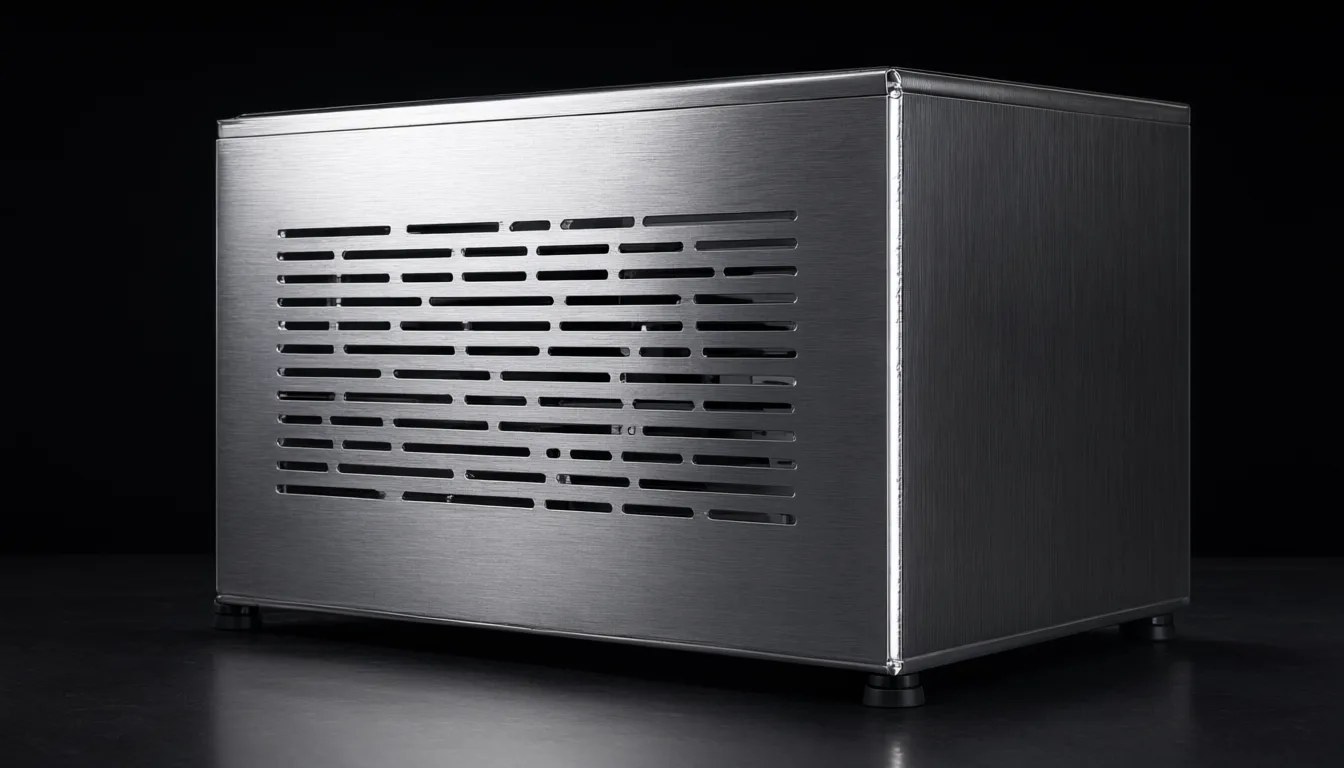
Built Like a Factory, Quoted Like Software
Sheet metal punishes sloppy design harder than any process here: an unfold that ignores the bend K-factor arrives as a bracket that gaps at the corner; a countersink placed 0.4 mm from a bend line oil-cans on the shop floor; a “weld everything” spec triples price for joints a $0.08 clinch does better. MOMAKING's quoting engine reads bends, flanges, hardware and weld beads from your 3D model the way the brake and laser will execute them — which is why the 3-second number survives the engineer's review instead of doubling after it.
Standard flow: 3D model (SolidWorks, STEP or DXF assemblies) in, DDM flat patterns and bend drawings out free, parts through laser → brake → hardware/weld → finish, with dimensional reports on batches. From one-off racks to five-figure production enclosures with hardware kits and packaging on the same PO. The laser cutting service page holds the cutting detail; finishing and assembly are quoted as line items, never surprises.
| Item | Capability |
|---|---|
| Cutting | Fiber laser: mild steel ≤20 mm, stainless ≤12 mm, aluminum ≤15 mm, brass/copper ≤8 mm; punch-nibbler combo for louvers/formed features |
| Forming | CNC press brake, tooling charts published; inside radii from material thickness up; hem, louver, extrusion options |
| Joining | TIG/MIG weld (aluminum specialist beads), spot weld, clinch/PEM hardware, riveting, solder where sane |
| Tolerance | Cut ±0.05-0.1 mm; bend ±0.2-0.5 mm; assembly per drawing datums |
| Materials | CRS, GI, SS304/316, Al 5052/6061/1100, brass, copper; pre-finished & brushed stock on order |
| Finishing | Powder coat (custom RAL), liquid paint, passivation, anodize (mask-planned), zinc, brushing, branding |
| Lead time | Prototype 3 working days; 100 pcs 3-7; production 7-15+ scheduled |
Free with every job: DDM flat patterns, bend drawing, hardware/tooling check - yours to keep even if you order nothing.
Frequently Asked Questions
What is the fastest sheet metal prototype?
Do you produce manufacturing drawings for me?
What thicknesses can you handle?
What tolerances should I spec?
Can you do hardware like rivets, PEM and threads?
Which finishes work on sheet metal?
Bend Allowance, K-Factor and Why Flat Patterns Are a Legal Document
Sheet does not fold like paper: the outside stretches, the inside compresses, and the neutral axis sits somewhere between, depending on alloy, temper, thickness and the radius you will actually form to. The math that converts a folded model into an accurate flat is bend deduction — the k-factor times the bend geometry — and it is where flat-pattern drawings earn their existence. Get the K-factor wrong by 0.04 and a 1 mm-thick 304 panel with eight bends arrives with its hole pattern a full millimeter off the enclosure it was supposed to slip over. Our brake tooling tables carry the measured K-factor per material, thickness and punch V-width — measured on coupons, not copied from a 1998 textbook — so the DDM flat pattern we send back is not an estimate of the unfolded part; it is the cut file the laser will run and the dimensioned drawing your incoming inspector can check. This is also why the free flat pattern is a useful audit on every supplier you use: ask for it before ordering. A shop that cannot generate a correct flat pattern cannot hold bend dimensions either — the drawing is competence, made visible.
Practical bend rules that keep quotes flat: minimum inside radius tracks material (mild steel ~1×t, aluminum ~0.5–1×t, springy stainless wants ~1×t plus patience), bend length below ~5× material thickness runs unstable angles and wants a relief notch or a tab, holes within 2.5×t of a bend line become ovals (plan clearance or deburr-after), and hemming a 0.6 mm skin around 3 mm of structural flange is beautiful and absolutely should be quoted as a second-forming operation. Each of these appears in the marked DFM the same day the quote lands.
Weld, Clinch or Fasten: The Joining Decision Tree
Clinch (PEM/self-clinching) wins when assemblies get serviced: standoffs and nuts displaced into the sheet at press tonnage, removing cleanly with a driver and reinstalling new hardware at field service — the maintenance-friendly default for electronics chassis. Rivets (self-piercing, eyelet, structural) join dissimilar materials without heat and survive where welding aluminum to steel chemistry refuses; blind access needs a rivet gun, and the cosmetic side wants a flush-rivet callout. Spot weld is cheap and fast on coated steels but destroys paint prep at the nugget and can't cross to aluminum with spot guns — weld-nuts and studs are its hardware siblings. TIG/MIG carries structural joints and aluminum, buying distortion in the price: fixtured welds, stitch sequences and post-weld flattening are all process choices with labor attached; the drawing should say which faces are cosmetic and we keep heat and hammer away from them. Adhesive + mechanical hybrids exist for vibration duty and skins that hate heat. The decision tree is service (clinched or riveted), material pair (rivet or adhesive if dissimilar), load (weld), and cosmetic surface (avoid all; use fasteners with covered heads). Quote the joint plan explicitly and the enclosure stops being assembled from hope.
Finishing Flow: Powder Coat as an Engineering Step, Not a Paint Jar
Powder coat is a process with geometry rules. It needs electrical grounding to stick (masked insulating surfaces stay bare plastic rivets and grommet holes should be planned for), a cure oven around 200 °C (parts that trap moisture or air vent through holes or bake into blisters — welded sealed boxes are illegal until you drill the vents the welding quote should have carried), and it builds 60-120 µm thick, which is why threads and press-fit holes get masked or, better, coated before hardware installation. RAL color-matching is a two-day lane; textured finishes hide substrate brush marks and weld grind at zero extra cost, which is why industrial enclosures pick texture by habit. The buyer rule that prevents the most rework: name the cosmetic faces and the fit surfaces; texture hides on the outside what gloss cannot forgive, and masked bores accept their PCB standoffs at the first try.
All figures here mirror the shop's verified capability; sheet metal DFM marks bend, cut, hardware and coating interactions in one pass, delivered with the quote inside 24 hours.
Worked Example: The 1U Chassis That Found Its Price in Three Changes
A 300×200×45 mm server accessory chassis in 1.5 mm steel, 2,000/year, arrived quoted elsewhere at $28.60. The teardown: 34 bends (four below the min-flange line — scrap risk priced in by the previous shop's silence), a clamshell seam with nine rivet-nuts and sixteen screws, four different hole diameters under 3 mm, and a blind seam requiring a welder's Tuesday. The changes proposed, each priced separately in the DFM: move the four impossible flanges to tabs with notch details (bends became legal, no more scrap tax); standardize holes to two sizes (six tool changes deleted from the punch plan — a second hit); convert the blind seam to a riveted clinch band with half the hardware, accessible from the service side; relocate the ground stud from cosmetic top to internal rail. New price: $19.40, and the drawing's notes grew five lines. The chassis did not change identity — its design-for-manufacture debt did. That is the sheet metal quote worth having: line items of geometry choices with dollars attached, not a single number someone hopes you won't question.
Every DFM suggestion above is marked on your model with its dollar delta; take any subset and the re-quote follows instantly, because the quoting engine priced each feature from the model, not from habit.
Unfold your enclosure today
Send the 3D model - flat patterns and an AI price within the hour, engineer-verified quote within 24.